
In a stunning announcement that has sent ripples through global politics, Canada is set to meet NATO’s long-standing 2% GDP defence spending target this fiscal year, a move that positions the nation as a formidable player in international security.
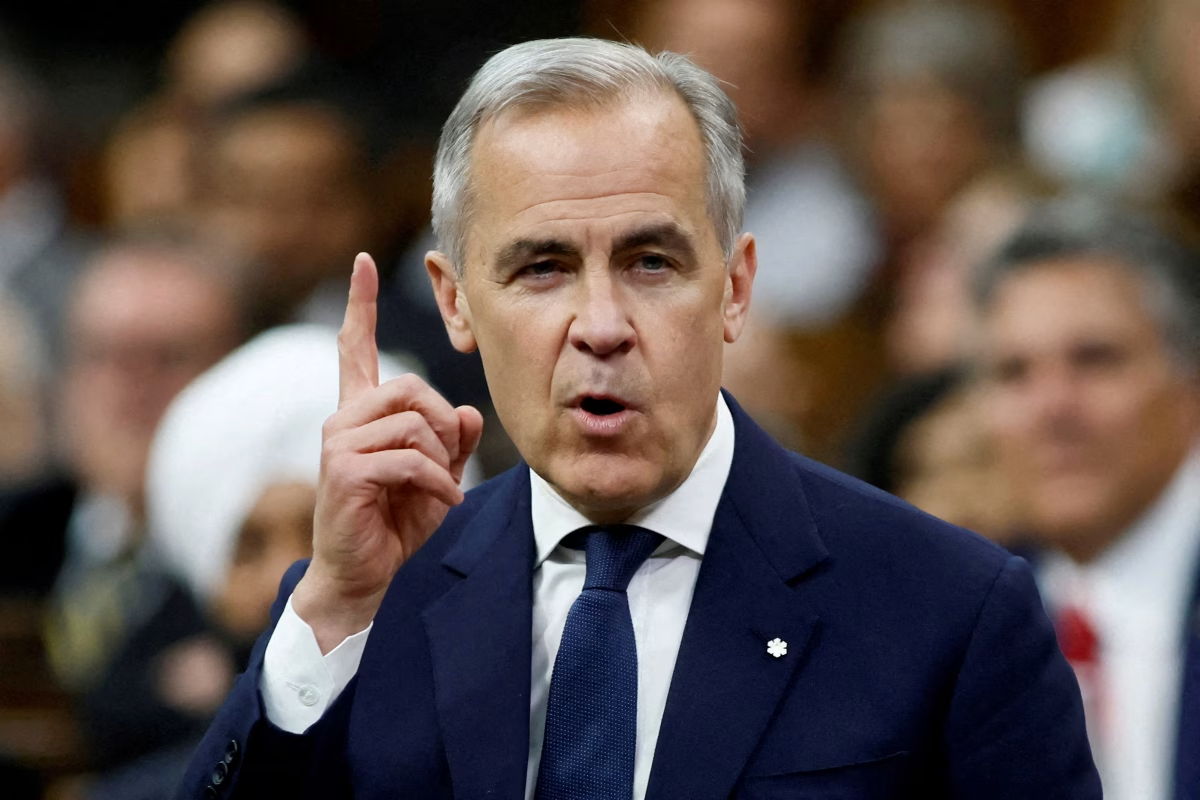
Prime Minister Mark Carney, speaking at the prestigious Munk School in Toronto on June 9, 2025, unveiled this ambitious plan, marking a significant shift in Canada’s defence policy.
This decision, made ahead of the G7 and NATO summits, underscores Canada’s commitment to global alliances and domestic security, while addressing years of international pressure to bolster its military contributions.
With a projected defence budget of $44.2 billion for the 2025-26 fiscal year, Canada is not only meeting but exceeding expectations, setting the stage for a transformative era in its defence strategy.
Table of Contents
A Historic Commitment to NATO’s Defence Goals
For years, Canada has faced scrutiny from NATO allies for falling short of the alliance’s 2% GDP defence spending target, a commitment first made in 2014.
In 2024, Canada’s defence spending stood at 1.45% of GDP, lagging behind 22 of the 32 NATO member countries that have already met or surpassed the target.
However, Prime Minister Carney’s announcement signals a dramatic pivot.
“We will further accelerate our investments in the years to come, consistent with meeting our new security imperatives,” Carney declared, emphasising a strategic focus on made-in-Canada manufacturing and supply chains.
This bold move comes well ahead of the 2030 timeline Carney pledged during the federal election and even surpasses the 2032 target set by the previous government under former Prime Minister Justin Trudeau.
The accelerated timeline reflects Canada’s response to evolving global threats and the need to strengthen its role within NATO, particularly as the alliance prepares for its upcoming summit in The Hague.
At this summit, NATO Secretary General Mark Rutte is expected to propose an ambitious plan to increase overall defence investment to 5% of GDP, with 3.5% allocated to core defence spending and 1.5% to defence-related infrastructure.

Canada’s Role in Global Security
Canada’s decision to meet the 2% GDP target is more than a financial commitment—it’s a statement of intent.
The move addresses long-standing criticisms from allies, particularly the United States, which has historically shouldered a significant portion of NATO’s defence burden.
Carney’s emphasis on redirecting defence spending to prioritise Canadian manufacturing is a strategic play to boost domestic industries while reducing reliance on foreign suppliers, particularly the U.S., where three-quarters of Canada’s defence capital spending has traditionally been directed.
The announcement also comes at a critical juncture.
Global tensions, from conflicts in Eastern Europe to rising concerns in the Indo-Pacific, have underscored the importance of collective defence.
NATO’s push for increased spending reflects the alliance’s need to modernize and prepare for multifaceted threats, including cyberattacks, hybrid warfare, and traditional military challenges.
By aligning with these goals, Canada is positioning itself as a reliable partner in the alliance, ready to contribute to global stability.
Breaking Down the Numbers: Canada’s Defence Budget
According to National Defence, Canada is projected to spend $44.2 billion on defence in the 2025-26 fiscal year.
This figure represents a significant increase from previous years and is a key step toward meeting the 2% GDP target.
However, a report from the parliamentary budget officer last fall estimated that achieving the 2% target by 2032-33 would require $81.9 billion annually.
Carney’s accelerated timeline suggests that Canada is prepared to make substantial investments now, potentially reallocating funds from other sectors or increasing overall government spending.
The focus on “made-in-Canada” solutions is particularly noteworthy. By prioritizing domestic manufacturing, Canada aims to create jobs, stimulate economic growth, and build a self-reliant defence industry.
This approach could involve investments in cutting-edge technologies, such as drones, cybersecurity systems, and advanced weaponry, as well as upgrades to Canada’s naval and air forces.
The shift also aligns with broader economic goals, including reducing trade imbalances and fostering innovation in high-tech sectors.
The NATO Summit: A Global Stage for Canada
The upcoming NATO summit in The Hague will be a pivotal moment for Canada to showcase its commitment to collective defence.
Secretary General Mark Rutte’s proposal for a 5% GDP investment plan is expected to dominate discussions, with member countries debating how to allocate resources effectively.
Canada’s early achievement of the 2% target positions it as a leader in these talks, potentially giving Carney leverage to influence the alliance’s future priorities.
The summit will also address emerging challenges, such as the need for resilient infrastructure to support modern warfare and the growing threat of cyberattacks.
Canada’s investment in defence-related infrastructure, as part of its broader spending plan, could include upgrades to military bases, communication networks, and transportation systems.
These improvements would not only enhance Canada’s military capabilities but also contribute to national resilience in the face of natural disasters and other crises.
Domestic and International Reactions
Carney’s announcement has sparked a range of reactions at home and abroad. Domestically, the decision has been met with cautious optimism.
Supporters argue that increased defence spending will strengthen Canada’s security and global standing, while critics question the feasibility of reallocating billions of dollars without compromising other priorities, such as healthcare and education.
The emphasis on Canadian manufacturing has been broadly welcomed, with industry leaders praising the potential for job creation and economic growth.
Internationally, Canada’s allies have expressed approval.
The U.S., in particular, has long pressed Canada to meet its NATO commitments, and Carney’s announcement is likely to ease tensions in bilateral relations.
However, some analysts warn that the proposed 5% GDP target could strain Canada’s economy in the long term, especially if global economic conditions worsen.
Challenges and Opportunities Ahead
Meeting the 2% GDP target is only the beginning.
Sustaining and expanding this level of investment will require careful planning and political will.
The government must balance defence spending with other pressing needs, such as addressing climate change, improving infrastructure, and supporting vulnerable populations.
Additionally, the shift toward domestic manufacturing will require significant coordination between government, industry, and research institutions to ensure that Canada can produce high-quality, cost-effective defence equipment.
The focus on made-in-Canada solutions also presents opportunities for innovation.
By investing in research and development, Canada could become a leader in emerging defence technologies, such as artificial intelligence and autonomous systems.
These advancements could have spillover effects in other sectors, driving economic growth and positioning Canada as a hub for technological innovation.
A New Era for Canada’s Defence
Canada’s commitment to meeting NATO’s 2% GDP defence spending target marks a turning point in its national security strategy.
Under Prime Minister Mark Carney’s leadership, the country is not only fulfilling its international obligations but also redefining its role on the global stage.
By prioritizing domestic manufacturing and investing in cutting-edge technologies, Canada is laying the foundation for a stronger, more self-reliant defence industry.
As the NATO summit approaches, all eyes will be on Canada to see how it navigates the challenges and opportunities of this new era.
With a bold vision and a commitment to collective defence, Canada is poised to emerge as a key player in shaping the future of global security.
Canada’s decision to boost defence spending to 2% of GDP in 2025 is a game-changer, signaling a new era of leadership and responsibility within NATO.
Prime Minister Mark Carney’s announcement reflects a strategic vision that balances global commitments with domestic priorities, setting the stage for a stronger, more secure Canada.
Stay updated with CTC News